Business
Cash Damming 101: How Canadian Homeowners Can Turn Their Mortgage Into a Tax Deduction
Your mortgage can be a powerful wealth building tool if you know how to use it.
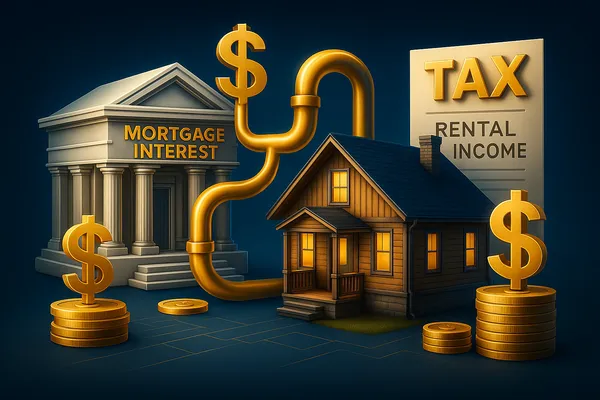
Good Debt vs. Bad Debt: How to Restructure Your Mortgage to Build Wealth in Canada
Not all debt is created equal. While most Canadians view debt as something to avoid or pay off as quickly as possible, savvy homeowners understand that there’s a powerful distinction between good debt and bad debt, and how you manage it can mean the difference between financial stress and long-term wealth.
Your mortgage is likely your largest monthly expense. But what if you could turn it into a tool that helps you pay less tax, reduce your debt faster, and grow your net worth? For Canadians with a rental property or other income-generating assets, this is more than possible; it’s called debt conversion, and it’s a strategy the wealthy have used for decades.
The Difference Between Good Debt and Bad Debt
Bad debt is debt that doesn’t help you earn income or grow your assets — think credit cards, car loans, or a mortgage on your primary residence. While you’re paying interest, there’s no return on investment, and no tax relief.
Good debt, on the other hand, is debt used to purchase income-producing assets — like rental properties, businesses, or investments. Not only can these assets appreciate over time, but the interest on the debt is often tax-deductible, which means you can write it off against your income and get money back at tax time.
That’s where the opportunity lies: converting bad debt into good debt through proper structuring.
How Canadians Can Make Their Mortgage Tax-Deductible
The CRA allows you to deduct interest only if the borrowed funds are used for the purpose of earning income. So, your regular mortgage payments on your home aren’t deductible — but a loan used to fund your rental property or investments is.
Enter strategies like Rental Cash Damming or the Smith Manoeuvre — both designed to restructure your mortgage into tax-deductible debt, legally and effectively.
Here’s a simplified example:
You own a rental property that generates income
Instead of paying rental expenses directly, you use that income to pay down your personal mortgage
Then you re-borrow the same amount using a HELOC or re-advanceable mortgage
You use those borrowed funds to pay the rental expenses
Now the interest on the borrowed funds becomes tax-deductible, because it was used to earn income
Over time, this cycle increases your tax deductions, reduces your effective interest cost, and allows you to use tax refunds to pay down your debt faster.
Why This Matters for Wealth Building
Imagine turning your non-deductible mortgage into a growing source of tax refunds.
You lower your taxable income each year
You redirect refunds to pay off your mortgage faster
You reduce your out-of-pocket interest cost
You free up cash flow earlier to reinvest or retire sooner
All without taking on additional debt or investing in volatile markets.
This is how wealthy Canadians accelerate their financial progress — not by working harder, but by structuring smarter.
Take Control of Your Debt Strategy
If you're a Canadian homeowner with a rental property or the ability to qualify for a re-advanceable mortgage, it's worth exploring how to turn your bad debt into good debt.
This isn’t aggressive tax planning — it’s compliant, proven, and used by professionals who understand the rules. The key is clean execution, the right structure, and a plan tailored to your situation.
Want to learn how to do this the right way? Our team helps homeowners design and implement tax-deductible mortgage strategies every day — helping them get out of debt faster and build wealth in the process.
Author

Devon Noble
Mortgage Broker
Passionate about tax deductible mortgage strategies. I use rental cash damming and The Smith Manouevre on my own properties.